Launch offer — valid today only

📄 Digital book in PDF · read it on your phone or print it

Your septic tank, illustrated: what's normal, what's due and what the inspector checks One Topic on Every Page

Made for Irish homes and Irish rules, and written for owners, not plumbers. The tank, the percolation area, desludging, warning signs and the inspector's checks: each topic on its own page, the drawing first, then what to remember. 69 illustrated pages.

SEE INSIDE THE BOOK

🔒 Secure checkout · PDF by email · 30-day guarantee

Every topic, its own pageEvery part of the system drawn, with the explanation beside it
69 illustrated pages9 parts, from the whole system in one drawing to the ten-question quick review
Up-to-date sourcesEPA Code of Practice 2021, Water Services Acts 2007 and 2012, and Building Regulations Part H
PDF by emailFormat

Look Inside the Book

Every page has one large drawing and a box with the measurements, intervals and checks you need to know:

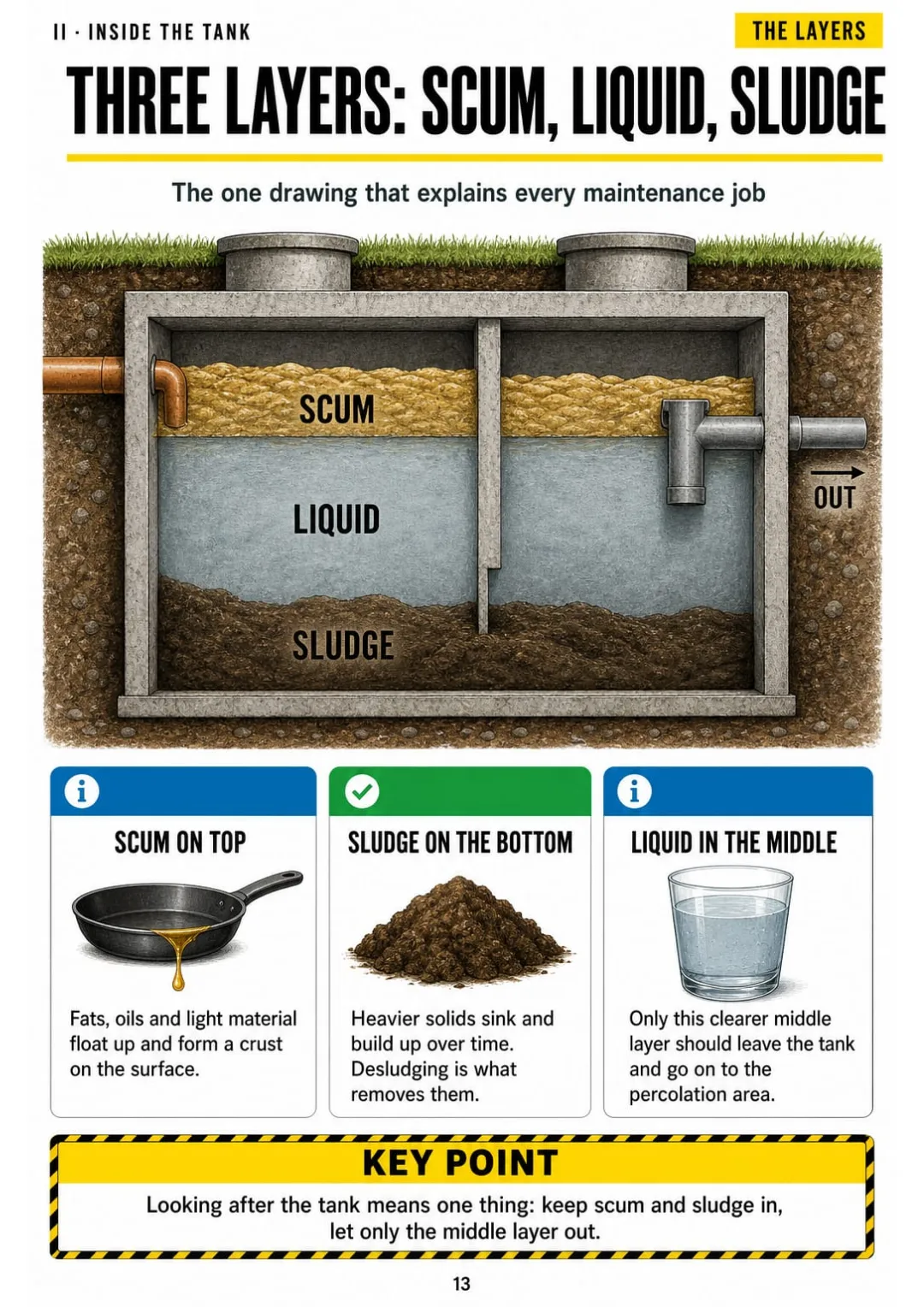
Scum on top, sludge on the bottom: only the clearer middle layer should leave the tank.
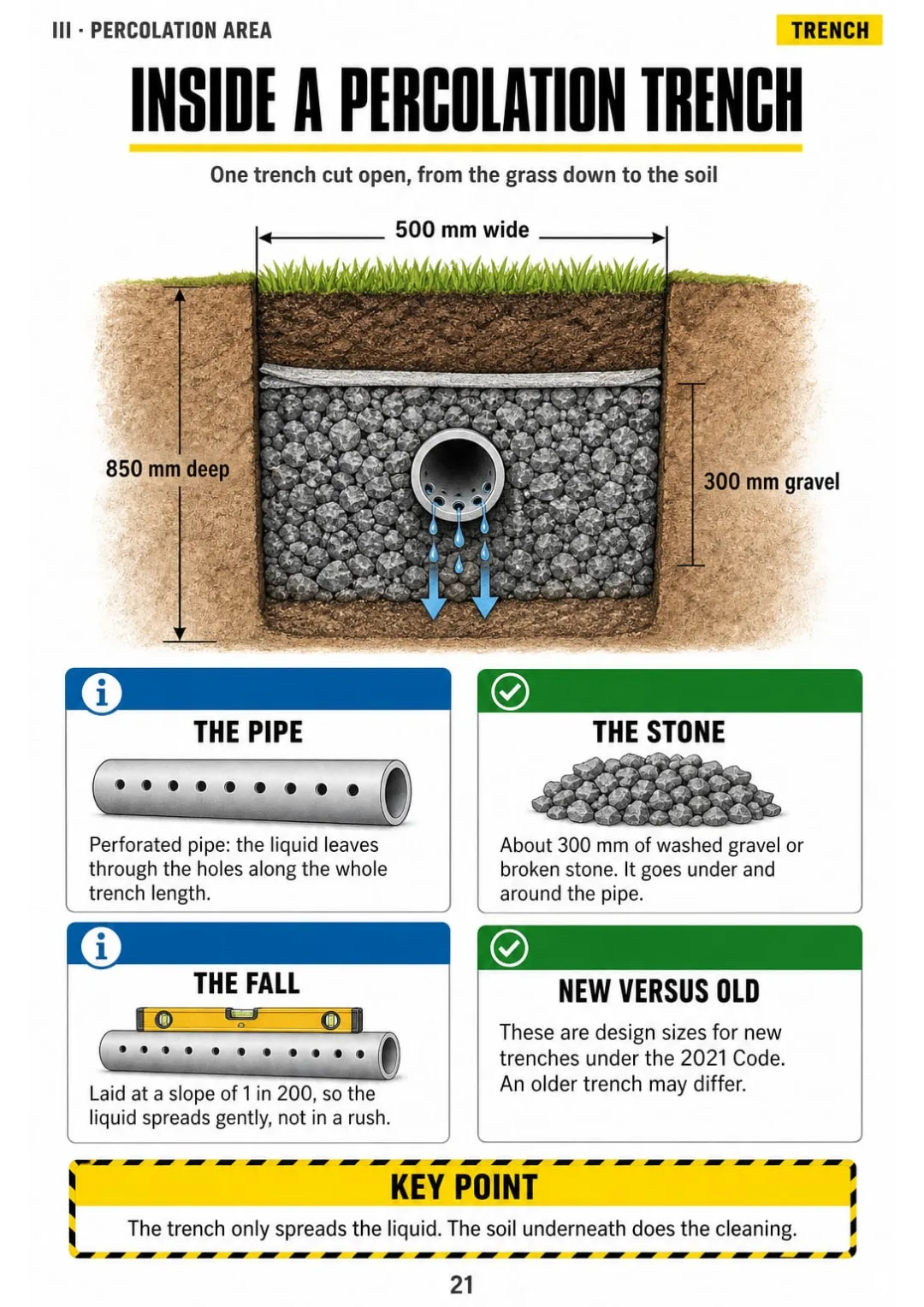
Gravity trench: 500 mm wide, about 300 mm of gravel, 1 in 200 fall, about 850 mm deep.
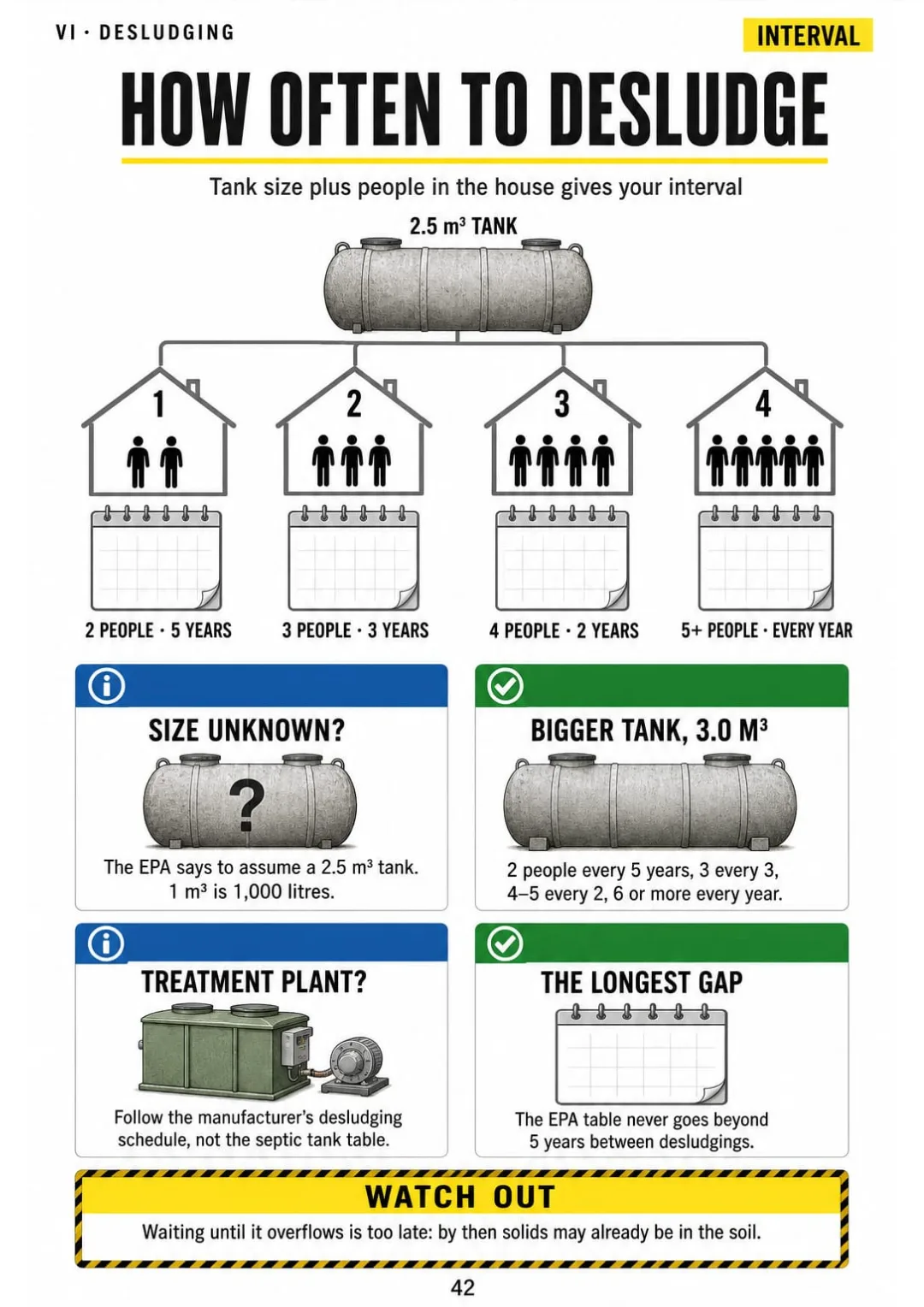
2.5 m³ tank: 2 people every 5 years, 4 people every 2, 5+ every year
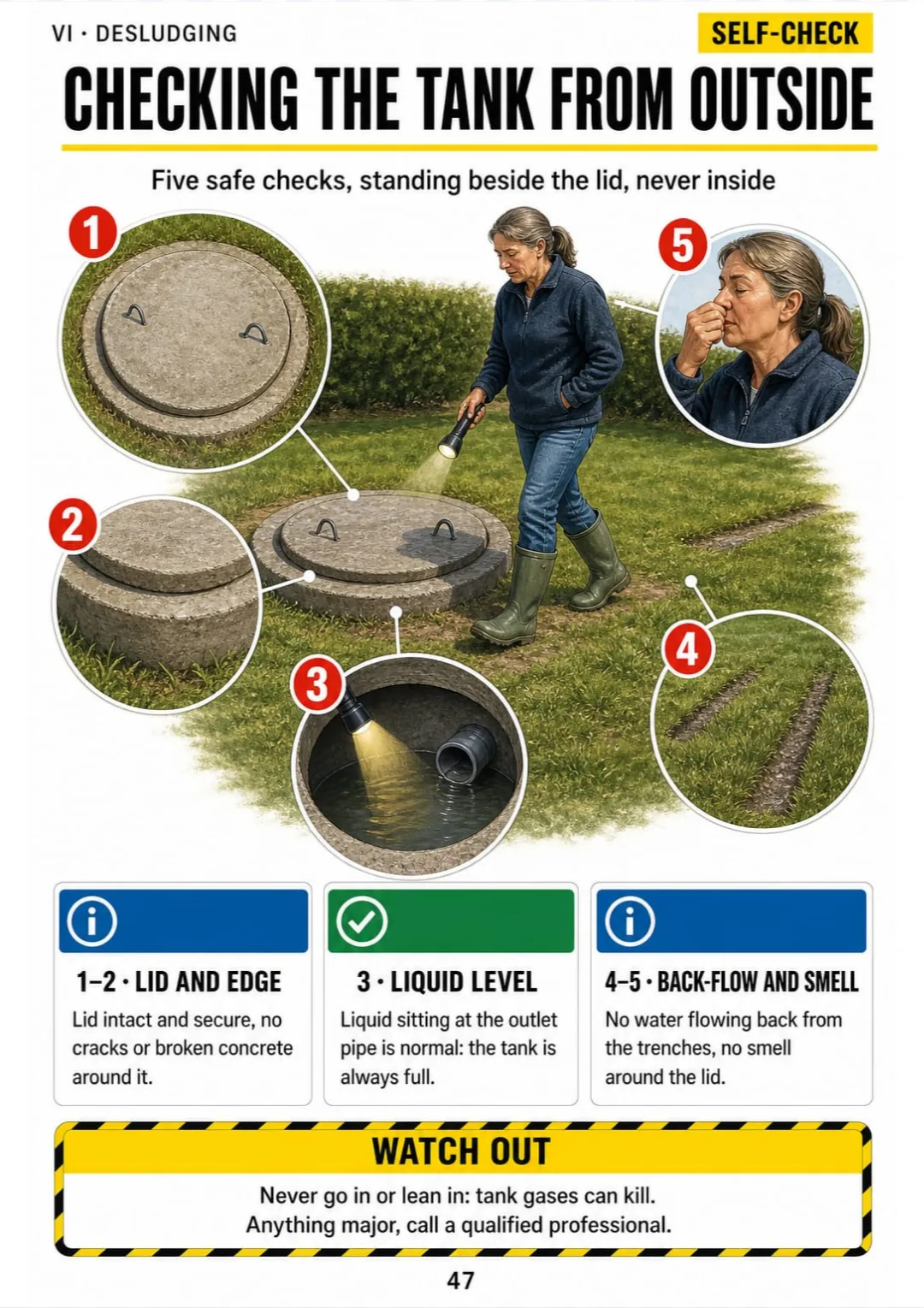
Lid, cracks, liquid level, back-flow, smell: all checked from outside
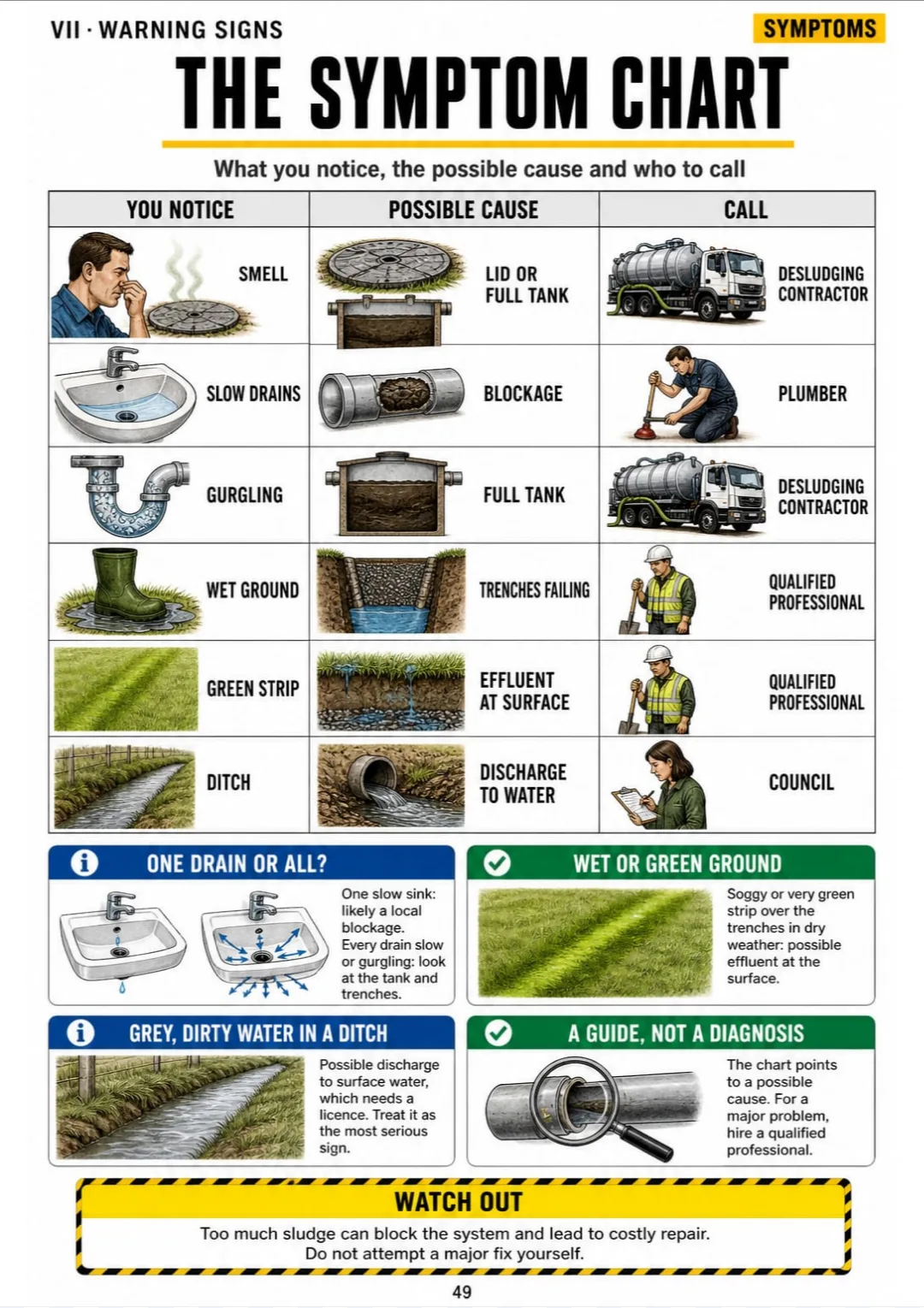
Smell, slow drains, gurgling, wet ground, green strip, ditch: possible cause and who to call
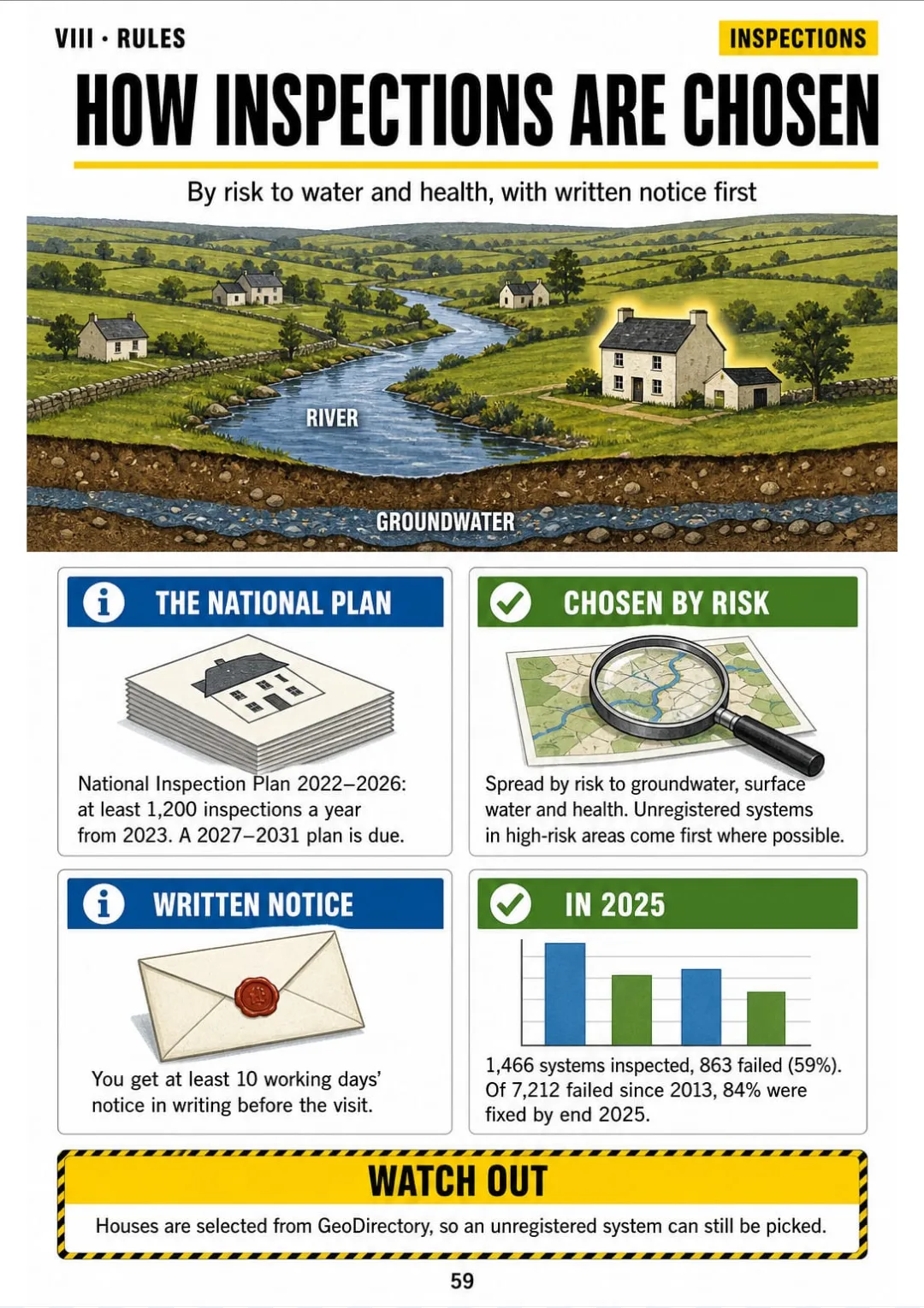
At least 1,200 inspections a year, chosen by risk, with 10 working days' written notice.
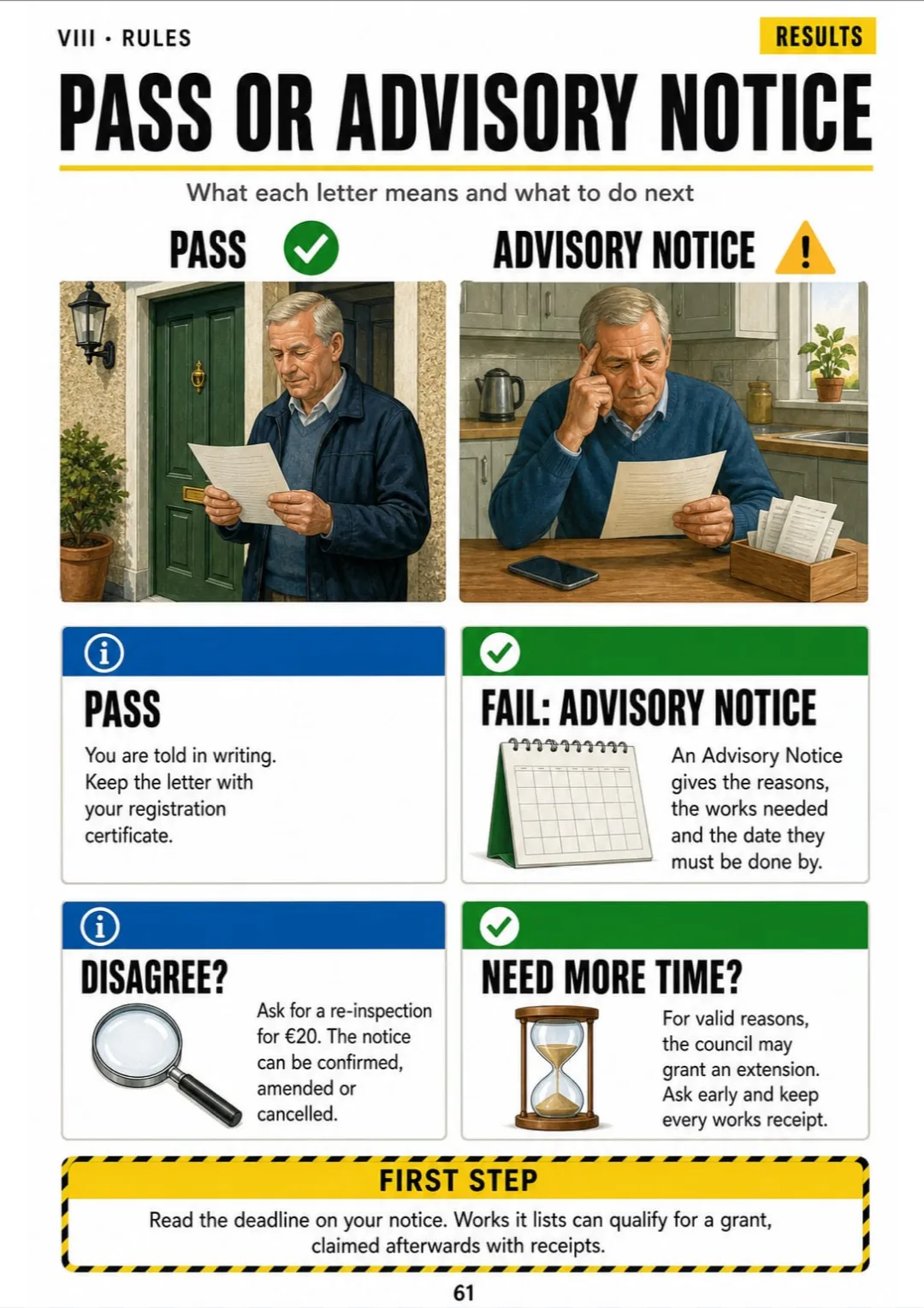
Fail means an Advisory Notice within 21 days; a re-inspection costs €20 if you disagree.
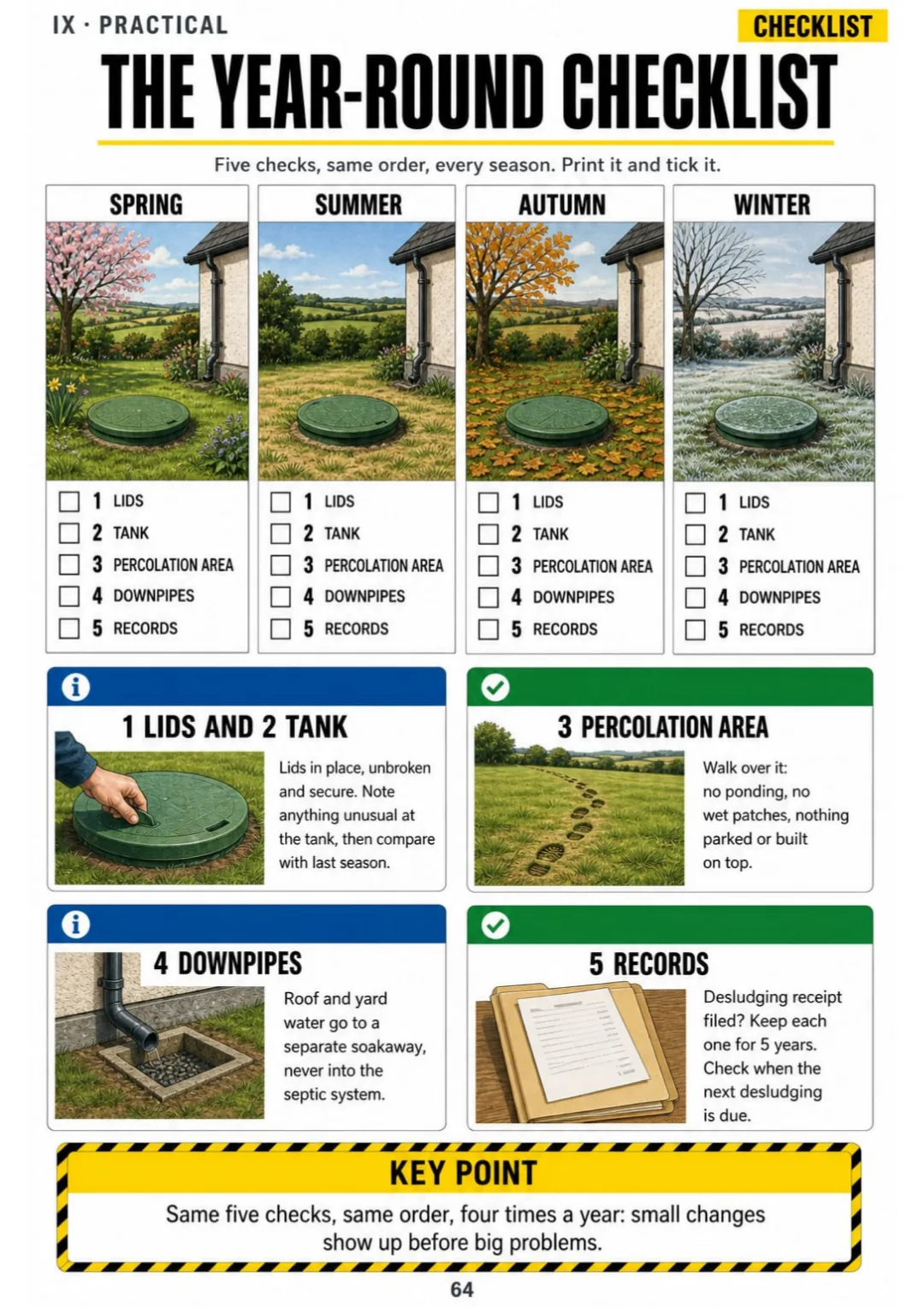
Lids, tank, percolation area, downpipes, records: the same five checks each season.

Swipe to see more →

These are real pages from the book. The table of contents is the full one: 9 parts and 65 topics.

The Problem Isn't You. It's How It Was Explained to You.

You're on the phone to a desludging contractor and he asks how often your tank needs emptying. You don't have an answer.

You looked it up. The guidance covers it in long paragraphs: tank capacity, population equivalent, sludge build-up, exceptions. By the third paragraph you've lost the thread.

2.5 m³ tank: 2 people every 5 years, 4 people every 2, 5+ every year

In the book, that same question is one page: a 2.5 m³ tank drawn with the household beside it. 2 people every 5 years, 4 people every 2, 5 or more every year.

Every other topic has its own page too: the three layers inside the tank, the percolation trench, the symptom chart, the inspector's six checks and the year-round checklist.

You see it, you understand it, and you book the desludging yourself, without going back to the guidance.

COMPARE FOR YOURSELF

The Same Topic, Two Ways to Learn It

THIS
  • The guidance: line after line
  • Trenches and gravel explained only in words
  • You meet the inspector still unsure
Percolation trenches are to be constructed in accordance with the site assessment and the design hydraulic loading, with the distribution pipework laid at a uniform gradient so as to ensure the even application of effluent along the full length of each trench. The trench width, the depth of aggregate beneath and around the perforated pipe, and the minimum thickness of unsaturated subsoil below the trench invert should each be determined with reference to the percolation test results and to seasonal variations in the water table.
FOR THIS
  • The percolation trench in one drawing
  • The widths, depths and fall in a box
  • You see it and you understand it
Gravity trench: 500 mm wide, about 300 mm of gravel, 1 in 200 fall, about 850 mm deep.
CONTENTS

Take a Look at the 9 Parts and 65 Topics

Your system at a glance, inside the tank, the percolation area, treatment plants, what goes down the drain, desludging and maintenance, warning signs, rules and inspection, and a practical year-round checklist: 69 pages, all illustrated.

IYour System at a Glance · pp. 5-12
  1. House, Tank, Soil: the Whole System in One Drawing
  2. Why the Soil Does Half the Work
  3. Septic Tank or Treatment Plant: Which One Do You Have?
  4. Finding Your Tank and Lids
  5. Finding Your Percolation Area
  6. The Names You Will Hear
  7. What Your System Can Handle: Population Equivalent
  8. How Old Is Your System, and Why It Matters
IIInside the Tank · pp. 13-19
  1. Three Layers: Scum, Liquid, Sludge
  2. Two Chambers: Why the Wall in the Middle
  3. The Inlet and Outlet Pipes
  4. The Bacteria Doing the Work
  5. Why the Tank Is Always Full
  6. Gases in the Tank: Why You Never Go In
  7. Lids, Vents and Children
IIIThe Percolation Area · pp. 20-26
  1. From Tank to Trenches: the Distribution Box
  2. Inside a Percolation Trench
  3. The Unsaturated Soil Below
  4. Irish Soils and Wet Ground
  5. Distances from the House, Wells and Streams
  6. What Can Go on Top of the Percolation Area
  7. Rainwater Must Stay Out
IVTreatment Plants and Other Systems · pp. 27-32
  1. How a Packaged Treatment Plant Works
  2. The Blower, the Alarm and the Power
  3. The Service Contract
  4. Polishing Filters
  5. Sand Filters, Reed Beds and Wetlands
  6. Pumps and Sumps
VWhat Goes Down the Drain · pp. 33-40
  1. The Golden Rule: Only the Three Ps
  2. Wipes: Why "Flushable" Is Not Septic-Safe
  3. Fats, Oils and Grease
  4. Bleach, Disinfectants and Cleaners
  5. Medicines and Antibiotics
  6. The Washing Machine and the Dishwasher
  7. Food Waste and Garbage Disposers
  8. Water Softeners, Hot Tubs and Sump Water
VIDesludging and Maintenance · pp. 41-48
  1. What Desludging Is
  2. How Often to Desludge
  3. Choosing a Contractor
  4. On Desludging Day
  5. The Receipt Is Your Record
  6. Additives: Do You Need Them?
  7. Checking the Tank from the Outside
  8. Looking After the Percolation Area
VIIWarning Signs and What to Do · pp. 49-56
  1. The Symptom Chart
  2. Slow Drains and Gurgling Pipes
  3. Smells: Where They Come From
  4. The Soft Green Patch in the Lawn
  5. Ponding and Water Coming Back Up
  6. Sewage in a Ditch or Stream
  7. After a Flood or Weeks of Rain
  8. Who to Call for What
VIIIRules, Registration and Inspection · pp. 57-63
  1. Your Responsibilities as the Owner
  2. Registering Your System
  3. How Inspections Are Chosen
  4. What the Inspector Looks At
  5. After the Inspection: Pass or Advisory Notice
  6. Grants for Repairs and Upgrades
  7. Building, Extending or Replacing a System
IXPractical: Year-Round Checklist and Frequent Mistakes · pp. 64-69
  1. The Year-Round Checklist
  2. Before the Inspector Calls
  3. Buying or Selling a House with a Septic Tank
  4. The Most Frequent Mistakes
  5. Your System on One Page
  6. Quick Review: Ten Questions

One Page, One Topic, All Clear

Think of it this way:

It's a wet week in November and there's a soft, extra-green strip across the lawn, right where you think the pipes run. You need to know now: is it normal, or is it a call to make?

You open the book at the symptom chart and there it is, drawn: each warning sign, its possible cause and who to call, from smells and gurgling pipes to wet ground and a ditch.

Smell, slow drains, gurgling, wet ground, green strip, ditch: possible cause and who to call

The same goes for the three layers in the tank, the percolation trench, desludging by household size and the inspector's checks: each one on its own page.

Septic Tank Illustrated is 9 parts and 65 topics, all drawn, and at the end a year-round checklist, the most frequent mistakes and a ten-question quick review.

What you see drawn, you don't have to memorize.

What's Inside Septic Tank Illustrated:

Ipp. 5-12

Your System at a Glance

The whole system in one drawing, why the soil does half the work, septic tank or treatment plant, finding the lids and the percolation area, the names you'll hear, population equivalent and the age of your system.

IIpp. 13-19

Inside the Tank

The three layers, the two chambers, the inlet and outlet pipes, the bacteria, why the tank is always full, the gases and why you never go in, lids, vents and children.

IIIpp. 20-26

The Percolation Area

The distribution box, inside a percolation trench, the unsaturated soil below, Irish soils and wet ground, distances from the house, wells and streams, what can go on top and keeping rainwater out.

IVpp. 27-32

Treatment Plants and Other Systems

How a packaged treatment plant works, the blower, the alarm and the power, the service contract, polishing filters, sand filters, reed beds and wetlands, pumps and sumps.

Vpp. 33-40

What Goes Down the Drain

The golden rule of the three Ps, why 'flushable' wipes aren't septic-safe, fats and grease, bleach and cleaners, medicines, the washing machine and dishwasher, food waste, softeners and hot tubs.

VIpp. 41-48

Desludging and Maintenance

What desludging is, how often to do it, choosing a contractor, desludging day, the receipt as your record, additives, checking the tank from outside and looking after the percolation area.

VIIpp. 49-56

Warning Signs and What to Do

The symptom chart, slow drains and gurgling, where smells come from, the soft green patch, ponding and back-up, sewage in a ditch, after a flood or weeks of rain, and who to call for what.

VIIIpp. 57-63

Rules, Registration and Inspection

Your responsibilities as the owner, registering your system, how inspections are chosen, what the inspector looks at, pass or Advisory Notice, grants, and building, extending or replacing a system.

IXpp. 64-69

Practical: Year-Round Checklist and Frequent Mistakes

The year-round checklist, before the inspector calls, buying or selling a house with a septic tank, the most frequent mistakes, your system on one page and a ten-question quick review.

At the end of the book: A year-round checklist, the most frequent mistakes, your system on one page and a ten-question quick review.


Plus: 2 Free Books

Spot the Problem: 30 Picture Cases

BONUS 1: «Spot the Problem: 30 Picture Cases»

Value on its own: US$ 17.90

Look at a drawn garden, tank or drain, decide what is wrong and what to do next, then check the answer, so you can recognise a warning sign the day it appears in your own garden.

Septic Fridge Sheets: Printable Quick Cards

BONUS 2: «Septic Fridge Sheets: Printable Quick Cards»

Value on its own: US$ 14.90

The do/don't drain list, the symptom chart, the safety rules and who to call, each on one printable card for the kitchen, the utility room or the folder with the house papers.

Septic Tank Illustrated with 2 Free Books

  • Septic Tank Illustrated: 69 illustrated pagesUS$ 63
  • BONUS 1: Spot the Problem: 30 Picture CasesUS$ 17.90
  • BONUS 2: Septic Fridge Sheets: Printable Quick CardsUS$ 14.90
  • High-resolution PDF to printIncluded
Total value US$ 95.80
YOUR PRICE:
US$ 27
You save US$ 68.80
YES, I WANT SEPTIC TANK ILLUSTRATED FOR US$ 27

📄 This is a digital PDF book sent to your email: nothing is printed or shipped.

Secure purchaseEncrypted payment30-day guarantee

PDF by email: We email you Septic Tank Illustrated as a PDF, together with the two free books. It's a single payment: no installments, no extra charges.

Who This Book Is For

You've just moved to a house with a septic tank

You've just moved to a house with a septic tank

You see the whole system in one drawing, from the house to the percolation area, and you know where everything is and what it does.

An inspection letter has arrived

An inspection letter has arrived

You see the inspector's checks drawn one by one, so you can walk round your own system and have your papers ready.

You've had the tank for years

You've had the tank for years

You check the warning signs against the symptom chart and see when desludging is due for your household, without opening the lid.

Everything You Get Today

US$ 95.80US$ 27
YES, I WANT SEPTIC TANK ILLUSTRATED FOR US$ 27

📄 This is a digital PDF book sent to your email: nothing is printed or shipped.

30DAYS
GUARANTEE

30-Day Guarantee

Try Septic Tank Illustrated for 30 days, bonus books included.

We refund everything if the file won't open, if the book isn't what you see here, if you were charged twice or if the email doesn't arrive. Just email us.

You pay once. No subscriptions.

Frequently Asked Questions

Is it for me if I've never had a septic tank before?

Yes. It's written for homeowners in the Republic of Ireland, not for professionals: Irish homes, Irish soils and Irish rules, every idea drawn and no jargon. Northern Ireland has its own rules, so this book isn't written for NI.

Where does the content come from?

From the EPA Code of Practice for domestic waste water treatment systems (2021), the Water Services Acts 2007 and 2012 and Part H of the Building Regulations, checked against the current versions. The EPA and your council publish this information for free, in long documents. The book puts it in drawings, one topic per page, in the order you need it at home: the symptom chart, desludging by household size, the inspector's checks and a year-round checklist.

Is it official material?

No. It's an independent illustrated guide. It is not published, approved or endorsed by the EPA, any local authority or any government body.

Does it replace a registered contractor or a site assessment?

No. It helps you understand and look after your system. Repairs, desludging and site assessments are always for a registered contractor or a qualified professional.

Are the picture cases the ones the inspector uses?

No. The 30 picture cases are written for this book to help you recognise warning signs. They are not official inspection questions.

When and how does it arrive?

The book and the 2 bonus books arrive as PDFs by email, at the address you enter at checkout.

Do I have to pay every month?

No. It's a one-off payment, with no subscription.

Can I have it on paper?

Yes. The PDF is printable, so you can keep it in the folder with the house papers.

How does the refund work?

You have 30 days. We refund everything if the file won't open, if the book isn't what you see on this page, if you were charged twice or if the email doesn't arrive: just email us.

Before You Close This Page

No more rereading guidance that doesn't stick.

The three layers in your tank: you see them drawn, and that's it.

You meet the inspector knowing where everything is.

Drawings make studying faster.

The book is right below.

One-time payment: US$ 27 · Guarantee: 30 days · PDF by email

YES, I WANT SEPTIC TANK ILLUSTRATED FOR US$ 27

📄 This is a digital PDF book sent to your email: nothing is printed or shipped.